Make Your Daily Routines Activity
Each one opens in a new tab, ready to print.
Words used in these worksheets (20)
 brush your hair
 brush your teeth
 do homework
 do the dishes
 eat breakfast
 eat dinner
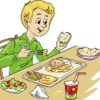 eat lunch
 eat snack
 get dressed
 go home
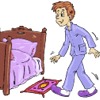 go to bed
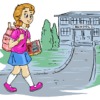 go to school
 make your bed
 read a book
 study
 take a bath
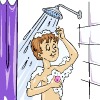 take a shower
 wake up
 walk the dog
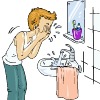 wash your face
Need different words? Remove words or add more from the full Daily Routines set. Your saved custom list is not changed.
More quick worksheets and games
These cards are great for teaching daily activities, but I also use them for grammar: time words like before, after, then and next; adverbs of frequency like always, sometimes and never; and questions like "What time do you...?" and "Do you... every day?"
They work for the present perfect too: "I have taken a bath 4 times this week." or "I haven't done my homework this week."
Useful phrases for Daily Routines
Pair the vocabulary with one sentence pattern at a time. Each level builds on the one before.
Starting out
First lessons, once students know the words- What time do you ___? I ___ at 7 o'clock.
- Do you ___ every day? Yes. / No.
- I wake up. I eat breakfast. I go to school.
Next step
Building on the basics- I always / sometimes / never ___.
- First I ___. Then I ___. After that, I ___.
- Before school, I ___.
Challenge
For older or more advanced students- If I don't ___, then ___.
- I have ___ 3 times this week.
- Yesterday, I woke up at 6 and ___.
Teaching tips for Daily Routines
Act it out
Routines are actions, so teach them with gestures. Call out "Brush your teeth!" and students mime it. It's quick, active and helps the phrases stick before any reading or writing.
Put the day in order
Have students arrange the flashcards in the order they do things. There is no single right answer, which gives you lots to talk about: "Do you take a bath before dinner or after dinner?"
Add time and frequency
Once the actions are familiar, add a clock or an always/sometimes/never scale. The same 20 cards can carry a lot of grammar.
Watch the verb forms
Most cards are full phrases (make your bed, do homework). Word searches and crosswords handle multi-word answers, but for younger students the bingo and flashcards are a gentler start.
Daily Routines lesson ideas
My day comic
Students choose six routine cards and draw a simple comic strip of their day, adding a time to each panel: "I wake up at 7:00."
Always, sometimes, never
Draw a scale on the board. Ask "Do you make your bed every day?" and students point or answer "Always," "Sometimes" or "Never." Build up to full sentences over time.
Find someone who
Give students a grid of routines ("takes a shower in the morning"). They walk around asking "Do you...?" until they find a classmate for each box.
A daily routines week
Flashcards and actions on day 1, word search on day 2, the "put your day in order" activity on day 3, then a board game with "What time do you...?" to finish.
More Daily Routines resources from MES
- Daily routines flashcards large cards, game cards and a handout
- Speaking First Curriculum Unit 3 uses routine actions for TPR
All Daily Routines images (38)
Click a picture to add it to your worksheet list or take it out. Up to 30 words. Words in your list are shown first.
No images match your search.
Build once. Make everything.
Planning a full unit? The Custom List Maker lets you mix words from any category, save your list, and make 19 different worksheets and games from it all week long.